
Free Consultation
(512) 910-2000
Habla Espanol
Free Consultation
(512) 910-2000
Habla Espanol
Written by TK Injury Lawyers, reviewed by Trent Kelly on July 17, 2026
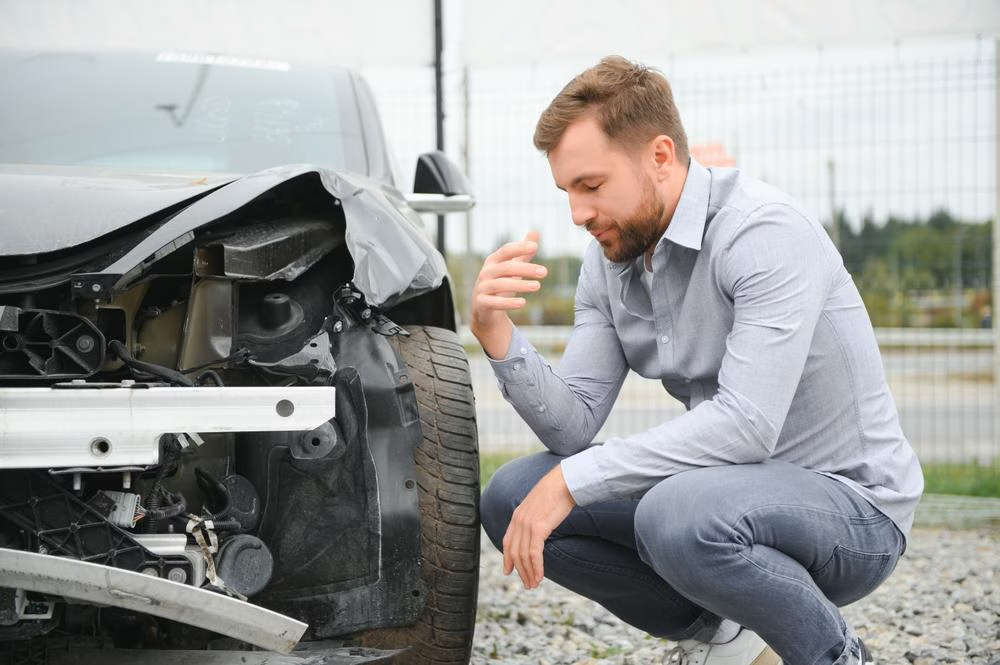
Texas roads are among the busiest in the country, and the common causes of car accidents on them follow a consistent and largely preventable pattern. Negligent behaviors such as speeding, distracted driving, unsafe lane changes, and failure to yield the right of way account for the vast majority of collisions across the state each year. Drunk driving, fatigue, and adverse weather conditions add significantly to the toll of injuries and fatalities.
Understanding what drives these crashes matters, but so does knowing what to do after one happens. At TK Injury Lawyers: Austin Personal Injury Lawyer, our car accident lawyers in Austin can guide you through every step of the claims process, from gathering evidence and dealing with insurers to building a case that reflects the impact of your injuries.
Every crash has a cause, and most trace back to a decision someone made behind the wheel. The following are the most frequently documented common causes of car accidents on Texas roads.
When a driver exceeds the posted speed limit or travels too fast for road conditions, reaction time shrinks and stopping distance increases. Speeding reduces the time available to react to hazards and significantly increases the force of impact, resulting in more serious injuries and a clear basis for negligence.
Distracted driving remains one of the deadliest problems on Texas roads. According to the recent data from the Texas Department of Transportation, it was responsible for 86,384 crashes in previous years, seriously injuring 2,437 people and killing 299. Phone use is the most cited factor, but any activity that pulls attention from the road qualifies. When a distracted driver causes a crash, their inattention constitutes direct negligence.
Drivers who run red lights or ignore stop signs create high-speed, lateral-impact collisions that frequently cause catastrophic injuries. Violations of the right-of-way rules establish negligence as a matter of law.
Merging without checking mirrors, drifting into an occupied lane, or cutting off other vehicles causes sideswipe collisions at highway speeds. Video footage, witness accounts, and physical damage patterns are the key evidence in these cases. Proving a driver failed to ensure a lane was clear before changing is a straightforward negligence argument.
Alcohol and drugs impair judgment, slow reaction time, and degrade every skill needed to operate a vehicle safely. When a drunk or impaired driver causes a crash, their decision to get behind the wheel is itself an act of negligence. A DUI conviction does not automatically resolve a civil injury claim, but it is evidence that supports a claim for compensatory and exemplary damages.
A fatigued driver can be as impaired as an intoxicated one. Drowsiness slows reaction time and, in severe cases, causes a driver to fall asleep at the wheel. When evidence points to fatigue as a contributing cause, it supports a claim that the driver knew or should have known they were unfit to drive.
Adverse weather does not relieve a driver of the duty to operate their vehicle safely. Texas law requires drivers to adjust speed and behavior to match road conditions. When a driver fails to slow down in a rainstorm or maintain a safe following distance on a wet highway, that failure, not the weather itself, is the cause of the crash.
When a crash is caused by someone else’s negligence, injured victims have the right to pursue compensation. Texas follows a modified comparative fault system under Texas Civil Practice and Remedies Code § 33.001, allowing recovery as long as the victim is not more than 50 percent at fault. Recoverable damages can include medical expenses, lost wages, and pain and suffering. Acting quickly matters; critical evidence disappears fast, and Texas imposes a two-year statute of limitations on personal injury claims under Texas Civil Practice and Remedies Code § 16.003.
Understanding the common causes of car accidents in Texas is essential, but having the legal support after a crash can make the difference. Our team at TK Injury Lawyers: Austin Personal Injury Lawyer can handle every stage of your car accident claim in Austin. Contact an Austin car accident attorney at (512) 910-2000 for a free consultation.
Trent Kelly obtained his law degree from the University of Arkansas in 2007. He is licensed to practice law in Texas and regularly assists clients with their legal matters. Trent’s practice is primarily focused on personal injury matters – particularly those involving motor vehicles (such as cars, commercial trucks, 18-wheelers, and motorcycles) and wrongful death – but he also handles various business litigation matters as well. Click here to take a look at some complex cases Trent has resolved.
Years of experience: +15 years
Location: Austin, TX

This page has been written, edited, and reviewed by a team of legal writers following our comprehensive editorial guidelines. This page was approved by attorney Trent Kelly, who has more than 15 years of legal experience as a practicing personal injury trial attorney.

Written by TK Injury Lawyers, reviewed by Trent Kelly on October 23, 2026
Key Takeaways Tailgating causes many preventable rear-end crashes on Texas roads, especially in Austin tr...
Written by TK Injury Lawyers, reviewed by Trent Kelly on October 16, 2026
Key Takeaways Standard crashes generally stay on a Texas DPS driving record for three years from the cras...

Written by TK Injury Lawyers, reviewed by Trent Kelly on October 2, 2026
Key Takeaways Cognitive distraction happens when a driver's mind wanders even while their eyes stay on th...

Tell us about your case and our attorneys will contact you promptly
No Fees Unless We Win


 call us (512) 910-2000
 Message Us
 Call Us
  Car Accident